translated by Marta Dziurosz, Maria Jastrzębska, Danusia Stok and Elżbieta Wójcik-Leese
ISBN 978 1 910688 36 6
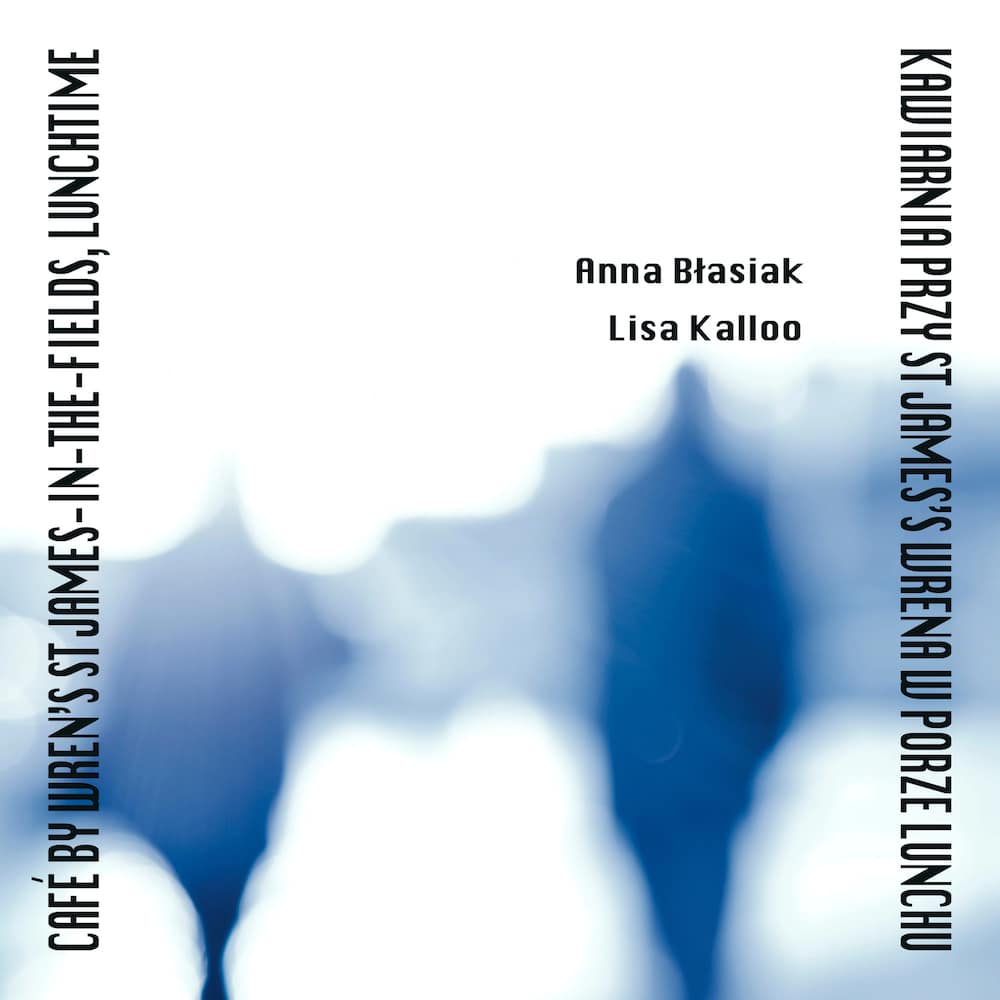
This book has collaboration and translation at its heart: between people, words and images, languages, cultures. The poems came first, in Polish. Then came the photographic response to them. Then four translators, MARTA DZIUROSZ, MARIA JASTRZĘBSKA, DANUSIA STOK and ELŻBIETA WÓJCIK-LEESE, took a set of 12 or 13 poems each and translated them into English. All people involved were women: the poet, the photographer, the four translators and the two editors. Together they arrived at 51 Polish poems, 51 English poems and 51 photographs making this collection. They raise themes such as cultural identity and migration, queerness, racism, isolation and family memories.
Praise for Café by Wren’s St James-in-the-Fields, Lunchtime
Wioletta Greg:
Anna’s poems make me think of the verse of the Swiss French poet Phillippe Jaccottet. She seems to be interested in analogies of life events, mysteries that are invisible at first instance, slips of tongue, contrasts, things held back, hidden moods and emotions. Just like Anna‘s poems, Lisa‘s photos capture and arrest details, writings, colours, lights and shadows, as well as textures of the world, they are snapshots, images captured as if by chance on a journey.
Peter Valente:
Anna Blasiak’s Café By Wren’s St. James – In – The Fields, Lunchtime is a book of mysteries, a world where dreams and memories glaze over the consciousness, where nature and objects are sentient evoking a past, in some cases, long gone; the poems suggests a narrative without a conclusion; they are like photographs, taken so long ago, where objects are at once clear and ambiguous. The poems record intense memories of loss but Blasiak is not sentimental; rather, she is concerned with self-transformation, wherever it is still possible in the present world; she is searching for a “hidden symmetry” in a world is receding into a kind of digital oblivion. As the World recedes, we are given in its place a seamless digital copy; a simulacrum; where Life was once discontinuous, boring, joyful, and sad, we now have the eternal hope for a kind of digital paradise, where there is no loss, where one is constantly preoccupied, obsessed, but with a sense of mourning, a sense of something missing, a lack. She navigates this lack, with great conviction, and the result is the strong and elegant poems in this book.
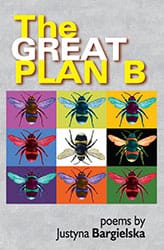
Justyna Bargielska is one of the most distinctive and original young poets writing in Polish today. She has published eight poetry collections, won the Rainer Maria Rilke poetry competition, and twice won the Gdynia Literary Prize. Although her work has been translated into French, German, Slovene, Dutch, Russian and Czech, this is the first time that her poems have been collected in English. The Great Plan B introduces British readers to the work of a poet who examines, with forensic precision, the landscapes of quotidian existence, our disappointments and humiliations. Combining colloquial diction, philosophical enquiry and religious references, these poems are witty, tongue-in-cheek, both self-deprecating and macabre while death is increasingly present, implacable. You can never be entirely certain whether she is serious or joking.
Praise for The Great Plan B
Tiffany Atkinson:
Justyna Bargielska’s poetry is an art of fierce surprises. Poems that might look small and docile on the page are anything but – they soon reveal themselves to be rigged boxes of devilish wisdom, opening out onto a world that is both familiar and suddenly, unpredictably, luminous, frightening, or both at once: “Do you know what our odds are? Zero./ But I’ve learnt to play for time / as it’s the body no less which is left on the battlefield”. Bargielska’s flexible idiom accommodates the most intimate, absurd and profound aspects of our contemporary lives at an almost breathless speed. Like telegrams these poems demand to be read over and over. And Maria Jastrzębska’s razor-sharp, glittering translations now bring the full range of Bargielska’s extraordinary voice to an English-speaking readership. If there can be such a thing as a tender rallying cry, this poetry is it: “I’m not enclosing hugs, I don’t send kisses, I wage /war on all fronts. Write back to me asap”.
Jamie McKendrick:
These poems by Justyna Bargielska make the word ‘daring’ sound tame. They move at a cruel speed, or as she puts it with characteristically mordant wit “I’m not leaving you, shoes, I’m merely walking ahead.” In a fairer world talent as prodigal as this would not be allowed. Maria Jastrzębska’s translations are urgent and electric, and effortlessly manage to keep up.
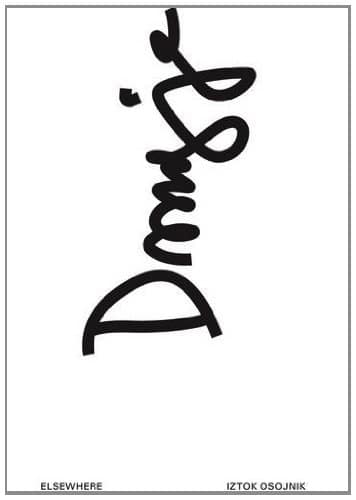
Elsewhere presents new and selected poems of the celebrated Slovenian poet Iztok Osojnik in a definitive English translation by Maria Jastrzebska and Ana Jelnikar. The volume captures the extraordinary breadth of Osojnik’s oeuvre, which addresses the rapid displacement and change experienced by his nation while maintaining an admirably international outlook. The poet’s travels to East Asia clearly provided him with a rich seam of experience and the jet-lagged flanerie of poems such as ‘Green Skyscrapers’ opens the way to a telling exploration of globalisation and cultural drift. A more lyrical persona comes to the fore in ‘Ode to a Hind,’ while selections from 2004’s Mister Today chart the moving and funny struggles of a character who pins the very meaning of life on poetry.
Cover image for the book from a tapestry weaving ‘Ithaca’ by New Zealand artist Wol. Background poster by @alexhouse-artwork.
I’m so excited my new poetry collection Small Odysseys* is coming out in October 2022 from Waterloo Press.
I started writing it at the same time as my last book The TrueStory of Cowboy Hat and Ingénue(Cinnamon Press) and thought all the poems would be part of one bigger book. But then The True Story of Cowboy Hat and Ingénuegalloped off at a rapid pace in a different direction. Dr Danne Jobin who I talked to recently in their series Poetology described it as a prose poetry novella. I like that. I think of it as a story told through prose poems or as one long prose poem in fact. I had to finish it before I could write anything else. Like the book before it*, it had a unifying theme, underlying structure. There was a narrative arc in TheTrue Story of Cowboy Hat and Ingénue even if it was fractured or non-linear, told in intersecting fragments which prose poems hold so well.
But then once that book was out in the world I could go back to the poems I had begun and left for a while. They were waiting patiently for me. Poems are good like that. And then I began to write more and more – until I had a whole new book. I had no clear idea where it would lead. This was a slow cook. In some ways that made it harder, scarier to write. I finished it just before the pandemic began. Though I edited it, fine-combing, during lockdown I decided not to add poems about Covid 19 as they didn’t belong. The manuscript already had its own shape and logic. Having said that I’m aware how the need for human connection was brought home to us so sharply by the pandemic. (For more information about the title I chose etc there are some blogs I wrote while editing: https://wordpress.com/post/mariajastrzebska.wordpress.com/1333)
It’s a very different book from The True Story of Cowboy Hat and Ingénue. That was set in an imaginary Hispanic/American kind of landscape inspired by travels both in California and Spain. The poems in Small Odysseys are set in Europe, in Slovenia, on Crete, in Germany, Spain, in the former Soviet Union, Poland and the UK. But also more importantly in that in-between space many of us navigate as we move between cultures and sub-cultures, geographical locations, identities. It mixes prose poems with lyrical ones. It includes the strange hybrid language of Ponglish. And poems are often set in a place between past and present. Some are poems where I have reimagined historical moments.
While the book doesn’t try for a unifying theme, preferring its own different pathways, at its heart there is separation, within family, within society and how we try to deal with both. How we try to connect in the face of breakdown, implosion, distance.
When I first began writing Small Odysseys the UK voted to leave the European Union. This wasn’t just a decision about trade – although the lorry queues at Dover are a clear example of its stupidity. It was a decision of far-reaching implications – a green light given to the racism and xenophobia we had fought here for many years. Its shadow hangs over the book – indirectly as is often the case in poetry.
I wasn’t alone in feeling broken-hearted about Brexit. We were and still are being subjected to a ‘make Britain great again’ fantasy, waves of nostalgia for British colonialism and imperialism. At the same time in my homeland the Polish government was – and continues – doing its utmost to undermine democracy, decimating women’s rights and promoting hatred against LGBTQ+ communities and individuals. Narratives of the second world war were and are appropriated to serve government ideology.
Against this backdrop, history and who narrates it become even more important. I’ve always written about love and war and in this book there are both re-imaginings of the past and explorations of the present. We need all the stories we can get about the people history books leave out as well as stories about who were are now. We have to show that what is happening around us is not being done in our name.
The gap between finishing a book and publication plays tricks too. As refugees from Ukraine flee across the Polish border from the Russian government’s genocide I am even more poignantly aware of our connections both across Europe and with other continents. Bridging distances and separations with warmth and food and kindness is more important than ever. A welcome which has to include refugees from Syria, Afghanistan, not only Europe. Otherwise our whole world becomes just one immense ‘hostile environment’*.
3*The ‘Home Office Hostile Environment policy’ was first introduced in the UK under the Conservative Lib-Dem coalition government in 2012 to make staying in the UK as difficult as possible for people without official leave to remain. As well as being government policy it has also become a whole social ethos. In 2018 the Windrush scandal exposed how hundreds of Caribbean immigrants to the UK had been harassed under this policy, many of whom were detained and deported to countries they had not lived in for countless years. Currently the British government continues with its plan to expel asylum seekers, deporting them to Rwanda.